Systems for the Serious Seeker
Here is a list of ways and means which I have found to be practical and deliver results. Anyone can use them, the only price being commitment and honest effort.
Meditation:
Meditation Technique from Mike Connors: Mike noticed that there was no progress in his TM( Transcendental Meditation) practice. He had the intuition that he needed to work on his suppressed emotions, and became a participant in ACA( Adult Children of alcoholics) To his amazement, after much ACA work, his TM practice took off, eventually leading to Realization. He said that he saw his problem was ‘a glacier of shame’ that the ACA work soon melted down to a block of ice, freeing his mind from the negative block. Here’s Mike’s description of his two-pronged technique:
| Intellectual Effort (To Identify our True Self) Position of the body and time of meditation not important Concentration Contemplation Problem-solving by the mind as taught in school, work, society We call this “thinking” Deals with words, meaning, concepts Seeking; self-inquiry; Shankara’s Vedanta; Richard Rose’s “back through the projector” This way of highly intellectual and abstract thinking develops a person’s ability to discriminate the Real Substance of existence from the Apparent Objects that seem to exist Is an energy consumer Hard work for most folks Nuts and bolts method of science and Jnana Yoga;Knowledge through doubtless understanding But this alone may not make us identify with omnipresent existence (Being) The value of contemplation is that it ideally leads to integration, identification, wisdom.But the key is that one must be looking to identify one’s self so that when the Real is found it is Known to be the Self Self-inquiry’s goal is intellectual, for certain, full and doubtless realization of the insubstantial nature of the world and the body, and the realization of “space of intellect” as the Self:”I am that Nothing and the only RealSubstance of all the universe.” | Effortless Meditation (Sinking into Transcendental Consciousness) Position of the body sitting and eyes closed every morning and evening for 20 minutes Not concentration Not directed thinking Essentially not recognized in western society, so effortlessness is not taught Few are aware of effortless meditation, even though there is a lot of talk about surrender, mindfulness, St.Theresa’s “Prayer of Recollection,” Mahesh’s TM, Zazen’s no-mind This is not intellectual, but a simple experience of subtler, quieter levels of thinking Sets up a condition where one is able to perceive subtle thoughts, and transcendence to silence can just happen Is energizing and easy The Key is to not “do” the technique, so that the automatic nature of thinking can be realized and self can be known as not the thinker or doer, not these thoughts or feelings or memories! But this alone may not cause us to identify with silent Being! The benefits of effortless meditation are deep relaxation of the nervous system, which gradually releases the accumulated stresses of a lifetime The goal of yoga is realization by the direct experience of transcendental pure consciousness as the innermost self: “I am this emptiness, silence, the absolutely real, eternal,omnipresent Being and the only Real Substance of all the universe.” |
Doing both methods alternately is very reinforcing and leads to full Realization.
Richard Rose: Retreat from Untruth, the Reverse Vector: The retreat from error can keep us safely grounded, while paradoxically leading us back up the ray of creation to our Source. We cannot expect to succeed in finding Reality by first postulating its existence and characteristics, and then using the intellect to ‘prove’ these postulations. Wishful thinking about our goal will not help us, no matter how noble the imaginings. Rather, a backing away from that which we find to be absurd, will lead us to the less absurd. We need to look for the final reality, no matter what that might turn out to be.
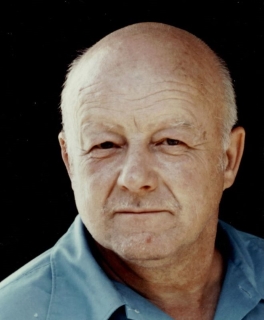
“Man is not going to find reality if he accepts that which the body tells him. -You must be prepared to find that which is, not that which you wish to find, even if it is oblivion.”-Richard Rose-
One of Rose’s most effective techniques is that of looking at one’s troubles: afflictions to the individuality sense. This act of looking at what is troubling us helps to bypass our ego or sense of self, thus setting up the possibility of a shocking surprise: we may discover we are awareness watching awareness; the Observer.
For more of Richard Rose’s Maximum Reversal System, obtain a copy of his remarkable book, The Albigen System.
Lifestyle:
A healthy lifestyle, simple and contained, is our source of energy. From this foundation we can generate vitality and drive for our search.
Setting the House in Order: our immediate physical environment needs to be conducive to our search. This means we must find some economic security as part of our foundation. The body/mind must be kept healthy so that it can think clearly, efficiently, and reliably. The domestic environment must also be adjusted so that the people with whom we live will be amenable to the search. A supportive environment, inside and out, will give us the calm and freedom to direct our energies upward. We must plan for security and tranquility.
While money is not the goal of our quest, we must be comfortable. A roof over our heads, a quiet place to meditate, food to eat, and the ability to travel to meet our fellows is all dependent on having a stable financial discipline. Our home is truly our castle. Through it we have security and tranquility. We must have a quiet place where we can study, undisturbed by friend or foe. Though this might change in location or character, it should never be a source of unreasonable conflict or strife in our life.
Exercise: the foundation for energy and relaxation.
Keeping the body in good shape keeps us alert, relaxed, and generates the energy we need for higher thinking. As we exercise and generate energy, we make it available for transmutation. By developing good habits, we can keep from losing the same energy through dissipation, waste and worry. Many know the feeling of nervous tension simply melting away during a good work out. If you haven’t yet developed an exercise routine, just a walk around the block every evening is a good start. It’s also a great time to think. Next time you’re out for a hike or walk, try reading something spiritual beforehand, and then let the thoughts come back as you move along.

“To transmute neural energy into mental energy you must not dream, or sit quietly, but should even walk, if walking keeps the attention on the subject.” -Richard Rose
Negative Emotions:
Gurdjieef and Ouspensky used to remark that negative emotions made the world go round. I couldn’t agree more. Ridding ourselves of these wastes of vitality is a lengthy and continuous process, but well worth it. The chief thing to remember is that getting rid of negative emotion does not mean merely putting on a mask of niceness while inside we rant and rave. It means ceasing to identify with the emotion, and separating from it when its cause has gone.
To act with emotion in the moment is much different than to be constantly in a negative emotional state. It is the latter state we must strive to abandon. The following zen story illustrates the difference:
Tanzan and Ekido were once traveling together down a muddy road. A heavy rain was still falling. Coming around a bend, they met a lovely girl in a silk kimono and sash, unable to cross the intersection.

“Come on, girl,” said Tanzan at once. Lifting her into his arms, he carried her over the mud. Ekido did not speak again until that night when they reached a lodging temple. Then he no longer could restrain himself. “We monks don’t go near females,” he told Tanzan, “especially not young and lovely ones. It is dangerous. Why did you do that?”
“I left the girl there,” said Tanzan. “Are you still carrying her?”
Abstinence, the art of celibacy:
Nearly all religions have advocated abstinence as a way to conserve energy, a means of protection, and to promote intuition. This is just as important now as ever. Celibacy can work wonders for a serious seeker, giving a joy and clarity not seen since childhood. To avoid mistakes and misunderstandings, individual advice should be sought from someone who has personal experience in extended periods of abstinence.
For a detailed look at celibacy and effects and misconceptions, read Shawn Nevin’s practical book on the subject:

“Sex is an acquired habit. Go beyond. As long as your focus is on the body, you will remain in the clutches of food and sex, fear and death. Find yourself and be free.” – Sri Nisargadatta Maharaj
“ Sexuality, if it is left to itself, as it is in the case of other species, other forms of life, is merely a biological need, because the living organism has this object to survive and produce one like itself. Anything you superimpose on that is totally unrelated to the living organism. But we have turned that, what you call sexual activity, which is biological in its nature, into a pleasure movement. – U.G. Krishnamurti
Groups:
The traditional form of working together has been the group, a brotherhood of like-minded people who strive towards a common goal. This is found in many walks of life, not just in spiritual pursuits. But in matters such as finding the true meaning of life and death, friends become truly valuable. Traveling in a group of fellow seekers offers friendship, protection, and speeds our progress. While it is alone we must face our truth, by working with others we become part of a ladder, each one helping another to move higher. Let’s look at three ways groups can work:
First, we have the group as a brotherhood, a group of friends by which we can see the many vagaries of human behavior, in ourselves as well as them. This could be likened to a mirror, in which we see ourselves through the group’s reactions to our own personality. It can also be of value in that we have trusted peers which we can use for advice and constructive criticism when we can’t see our way. Sometimes the efforts of our teacher are better understood too, when we are in a group and see the struggles of our fellow students as well as our own.

“Surround yourself with fellow seekers: There is tremendous benefit to associating with like-minded people. Better yet is sharing an apartment or house with a group of seekers. It is a resource of ideas and inspiration, as well as help with the everyday problems of life. You will learn from each other’s successes and failures. When one member is in despair, his fellows can in a sense, carry him until he recovers.” – Shawn Nevins
Second, we can use the group as a source of what might be called positive tension, or confrontation. This method of friendly questioning is used in a group meeting format to bring us to a greater understanding of our own mind. Through our efforts at self-inquiry and observation, we may begin to question our patterns of thinking, and in the group sessions use the added tension and differing view points to further our awareness of ourselves.
“The meetings are a mix of discussion and questioning with the overall aim of understanding ourselves and our minds better. Meetings begin with an open discussion of the topic for the week which serves as a catalyst for self inquiry. After the initial discussion the meeting moves toward questioning one another. This often takes place in a conversational format and the point of the questioning is to help each person retreat from untruth in themselves – to see where their own thinking might be clouded by desires or fears, where they might be rationalizing or if they might have unchallenged assumptions and convictions. The meeting is not intended for people who want to get together and idly talk about philosophy as an exercise and demonstration of their intellect. Meetings embody the spirit of friendship and are for people who want to take an honest look at themselves and confront the questions that are bothering them and who have a suspicion that the answers lay within. Many people who participate in this process over time will find that their thinking becomes more clear and that they understand themselves and others better.” – Jeff Crilley
A third way is to use the group as a way of becoming a vector, a seeker headed in a sure direction, helping those below them on the ladder of the path, as well as those brothers on the same rung. We become someone who helps, and learns the best way to help. We reach out beyond our own self-centered cares, and think of others: how can we help our fellow to overcome the blocks to his self-knowledge which he may be blind to, yet are clearer to us? We rejoice when someone in the group has a breakthrough, and lend a hand to the one who has slipped. This could be likened to a return to a more innocent life, we become less dependent on our ego, and better able to reach out.
“Realize that you want to help others: The ego prevents us from reaching out to others. With persistent self-analysis, you will come to have true consideration for your fellow man — you will see your flaws in others and others’ flaws in you. There is the thought that we should help others because it will help us in the long run, but this is not the same as truly wanting to help another. It is a milestone when we want to help simply because it is the natural reaction.” – Shawn Nevins
We have all been living our lives from an emotion or feeling based pattern of thought, or state of mind, from which we rarely awaken. In the brief moments of inspiration and intuition, we may catch a glimpse of this, and decide to look deeper. We may be lucky enough to find a group in which we can work. When we join up with such a group and begin working to awaken from this inherited sleep or hypnosis of life, we also see the endless varieties of sleep holding sway over our fellows. From this, we see more and more of the traps that hold sway over us, and through working with these fellows, gain greater courage and conviction in our quest.